Overview
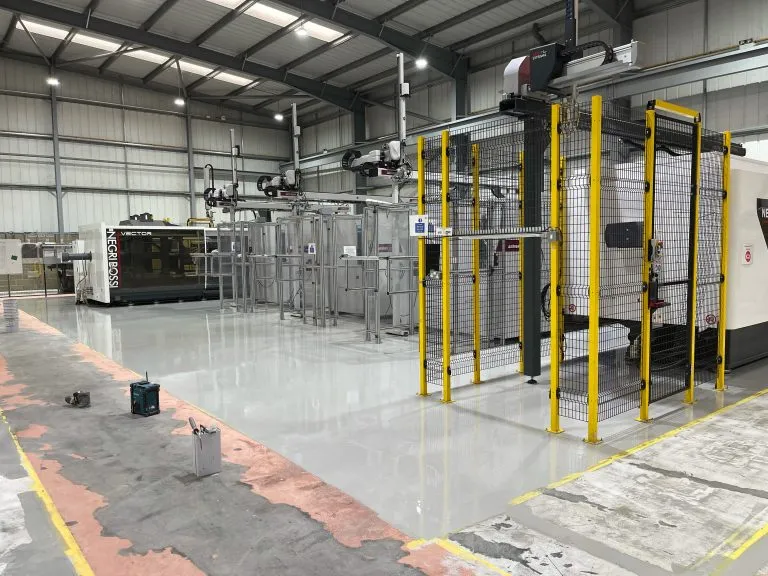
A specialist electronics manufacturer in Beckenham contacted us after a recently applied solvent-based floor paint had failed across their entire production floor within weeks of installation. The previous contractor had used an STR machine to prepare the concrete and applied a solvent-based paint over residual carpet adhesive - approximately 1mm of adhesive that remained bonded to the substrate throughout. The result was widespread coating failure: peeling, lifting, and surface contamination across every area of the floor.
The client needed a contractor who could diagnose what had gone wrong, prepare the floor correctly this time, and install a system that would actually last.
Why the Previous Coating Failed
The root cause was straightforward: inadequate substrate preparation. Solvent-based floor paints cannot bond through carpet adhesive. The previous contractor had not fully removed the adhesive layer before applying the coating, and the result was exactly what one would expect - the paint bonded to the adhesive, which was bonded to nothing substantial, and the whole system failed from below.
This type of failure is entirely avoidable. The correct preparation sequence for a floor with residual adhesive is PCD grinding to remove the adhesive, followed by diamond grinding to produce the required surface profile. Skipping or shortcutting either stage guarantees failure. We have remediated several floors where previous contractors have taken exactly this shortcut.
Two-Stage Grinding Preparation
We started with a three-phase ride-on floor grinder fitted with PCD (polycrystalline diamond) shoes - tooling specifically designed to remove stubborn coatings, adhesives, and surface contaminants that conventional grinding cannot handle. The full 1mm layer of carpet adhesive was mechanically stripped across the entire floor area.
Once the adhesive was completely removed, we switched to diamond grinding heads to refine the surface, removing the scratch marks left by the PCD shoes and producing a smooth, profiled substrate with a strong mechanical key. All minor imperfections, bolt holes, and surface marks were then filled and levelled to produce a flat, even base ready for coating.
Resin Coating System
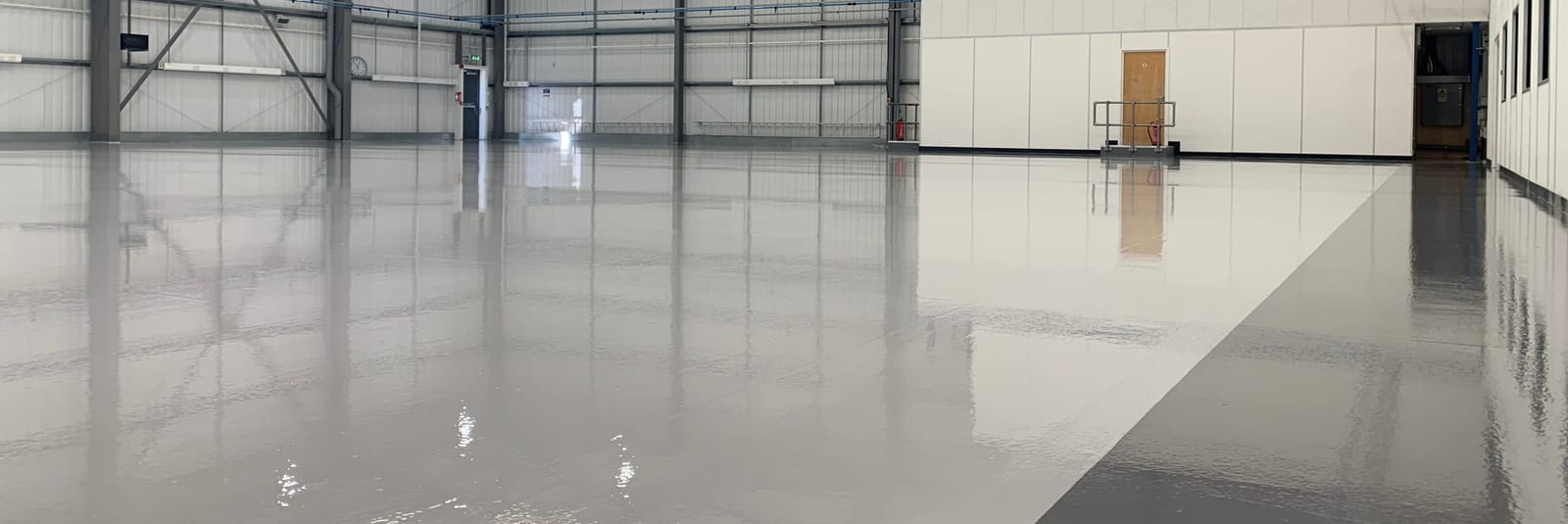
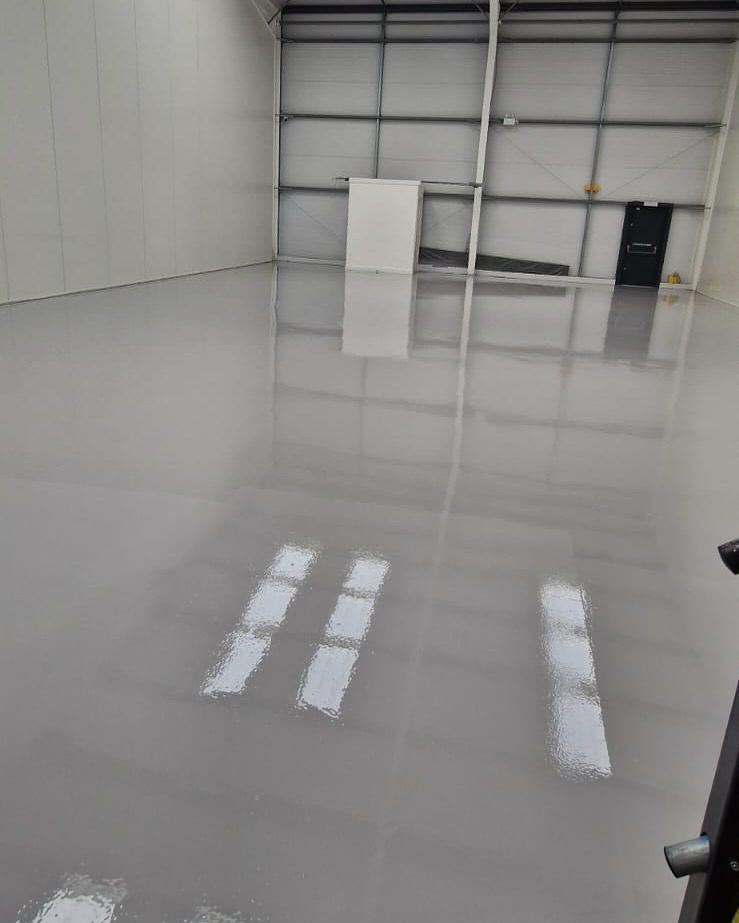
We applied two coats of solvent-free high-build resin in Goosewing Grey, achieving a dry film thickness of 400 microns. The advantages of a solvent-free system over the solvent-based paint that had previously failed are significant:
- Superior adhesion - solvent-free resins bond mechanically and chemically to properly prepared concrete, with no reliance on the substrate having no contaminants
- Greater durability - the cured film is harder, more abrasion-resistant, and more chemically stable than solvent-based paint
- No solvent off-gassing - the facility could continue operations in adjacent areas during application
- Long-term performance - properly prepared and applied solvent-free resin will not peel, lift, or delaminate under normal industrial use
Result
The floor was delivered clean, uniform, and fully bonded - the exact outcome the client had expected from their previous contractor and had not received. The Goosewing Grey finish gave the production space a professional, light-reflective appearance. The client has had no further issues with the floor since installation.
Has a Previous Contractor Left You With a Failing Floor?
We assess failed and failing resin floors, identify the root cause, and deliver systems that are correctly prepared and specified from the start.
Request a Free Site Survey