Overview
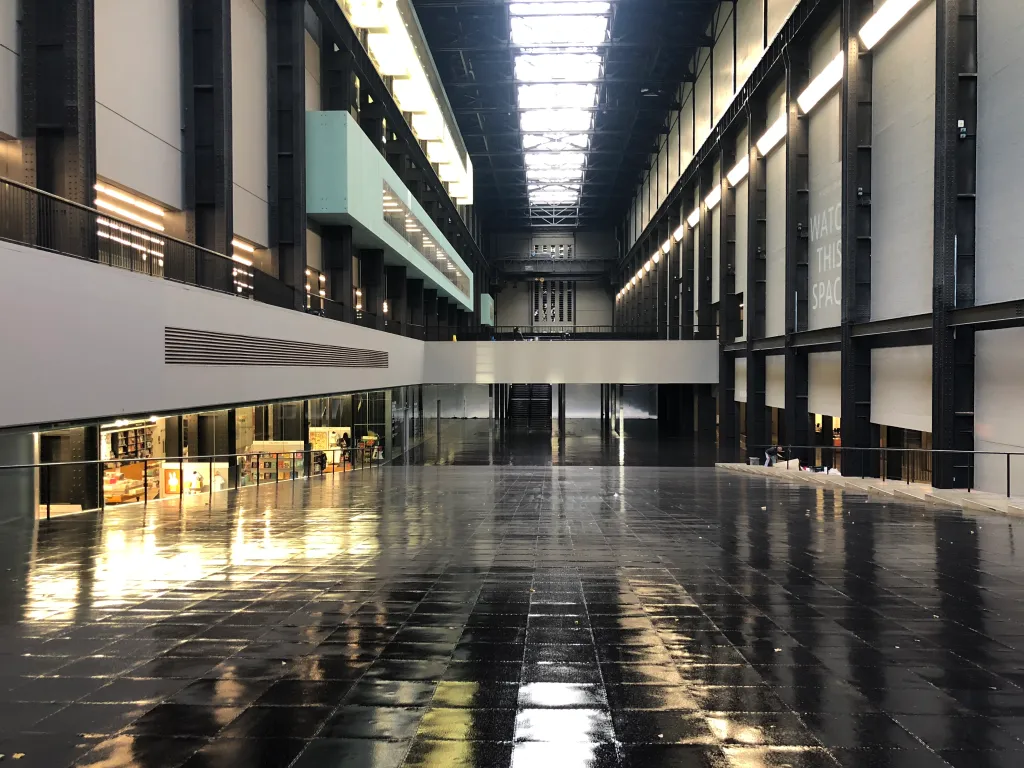
We were appointed to apply a protective resin floor coating across 3,200m² of the Turbine Hall ground floor at Tate Modern, London, as part of a major new art installation by artist Tania Bruguera. The project required a system that could protect a heat-sensitive thermochromic artwork beneath the floor surface while withstanding the abrasion and contamination from an estimated 5.9 million visitors per year - one of the most demanding footfall environments in the UK.
A separate 400m² section of the Turbine Hall received a matt protective coating as part of the same programme.
The Art Installation
The artwork, created in response to the global migration crisis, required a heat-sensitive floor that would reveal a hidden photographic portrait when sufficient body heat from visitors gathered in one place. A primer coat and two coats of black paint were applied to the original floor surface to create the base layer, and the thermochromic artwork was spray-applied to bring the creative concept to life.
Our role was to apply a durable, slip-resistant resin layer on top of the artwork - protecting it from foot traffic, moisture, and contamination while keeping the thermochromic effect functional and visible when conditions were met.
The principal challenge on this project was not the scale - 3,200m² is manageable - but the substrate beneath the coating. Applying any resin system too heavily or too opaquely would have compromised the thermochromic effect. The polyaspartic system was selected precisely because it can be applied at a thickness that provides meaningful protection without obscuring the layer below.
Resin System Selected
We applied an anti-slip polyaspartic resin coating across the full 3,200m² ground floor area of the Turbine Hall. Polyaspartic was chosen for three specific reasons:
- Rapid cure time - critical for a venue that cannot close for extended periods
- Abrasion resistance sufficient for the extremely high footfall at Tate Modern
- Clarity and depth of finish that preserved the artwork's visual function beneath
The system also met the anti-slip requirements for a public space of this nature, providing safe pedestrian traction across the entire hall floor regardless of weather or footwear.
Result
The Turbine Hall floor was handed over ready for the installation opening - protected, anti-slip, and with the thermochromic artwork fully operational beneath the resin layer. Visitors to the installation were able to experience the reveal effect as intended, while the floor itself withstood the continuous high-footfall demands of one of the world's most visited cultural venues.
This project remains one of the most technically specific resin flooring commissions our team has delivered - where the primary brief was not industrial performance but artistic integrity.
Need Resin Flooring for a Commercial or Public Space?
We specify and deliver resin systems for high-footfall commercial, retail, and public environments across London.
Request a Free Site Survey